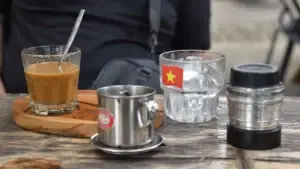
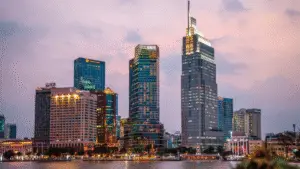
In Ho Chi Minh City, a coffee can arrive slowly through a metal filter, quickly over ice, or with a view of the street from a low plastic stool. The setting changes, but the invitation remains familiar: pause for a while, meet someone, and watch the neighbourhood move.
Vietnamese coffee culture is not defined by a single ritual. It encompasses everyday sidewalk stalls, family-run neighbourhood cafés, grand old coffee houses, apartment-building cafés and contemporary bars exploring Vietnamese beans through more refined brewing methods. To understand it, you need to follow both the cup and the places where people choose to drink it.
Table of Contents
▼
1. Understanding Vietnamese Coffee Culture
A brief history of coffee in Vietnam
Coffee arrived in Vietnam in the nineteenth century during French colonial rule. According to the International Coffee Organisation (ICO), Arabica was introduced in 1857 by French missionaries. Cultivation was initially tested in northern Catholic communities before spreading through central Vietnam and eventually reaching the Central Highlands and southeastern regions. Robusta and other varieties followed later.
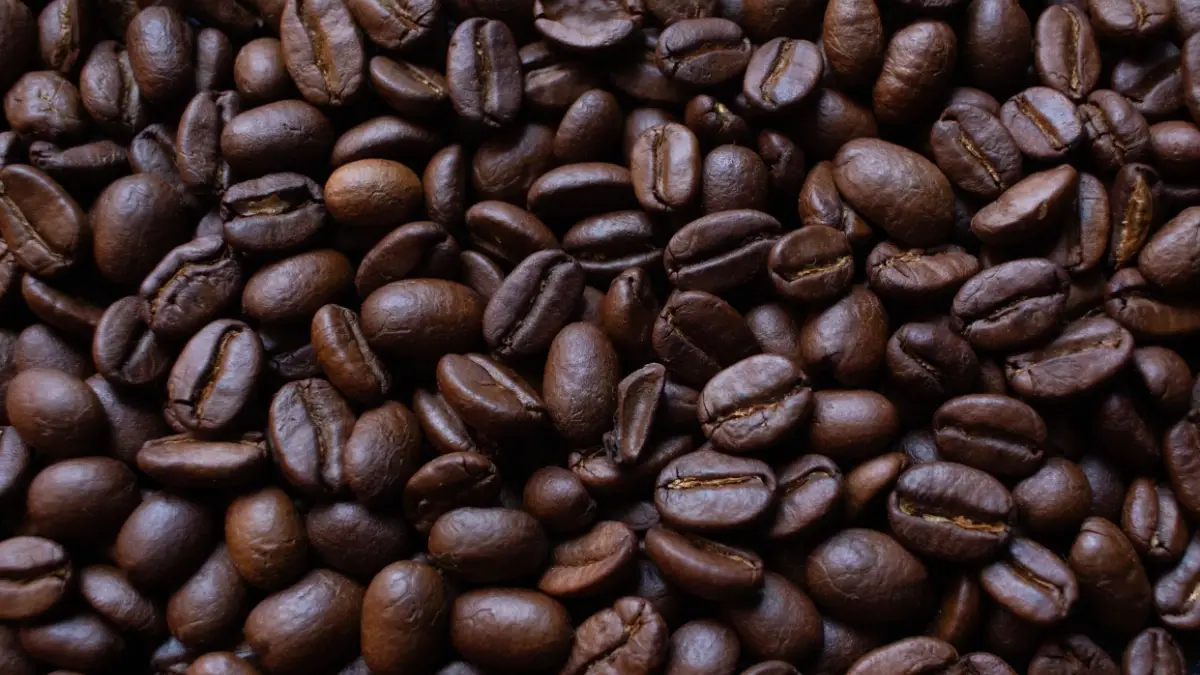
Coffee cultivation expanded significantly after the economic reforms introduced in 1986, known as Đổi Mới. Over the following decades, the Central Highlands developed into Vietnam’s principal coffee-growing region, supported by its highland climate and growing agricultural infrastructure.
This history is as much agricultural and political as it is culinary. Vietnam’s position in the global coffee industry did not emerge simply because coffee became a popular drink. It was shaped by colonial agricultural practices, economic transformation, land use and the expansion of commercial coffee production.
Vietnam's Coffee Industry Today
Today, Vietnam is particularly associated with Robusta coffee. According to USDA Foreign Agricultural Service estimates for the 2025/26 marketing year, the country is forecast to produce approximately 30 million 60-kilogram bags of Robusta and one million bags of Arabica. These figures are forecasts rather than final harvest totals, and actual production varies with weather conditions, yields and market developments.
The Central Highlands remains at the heart of Vietnam’s coffee industry. Provinces such as Đắk Lắk, Lâm Đồng, Gia Lai and Đắk Nông are important growing areas, with coffee cultivation playing a significant role in regional agriculture and local livelihoods.
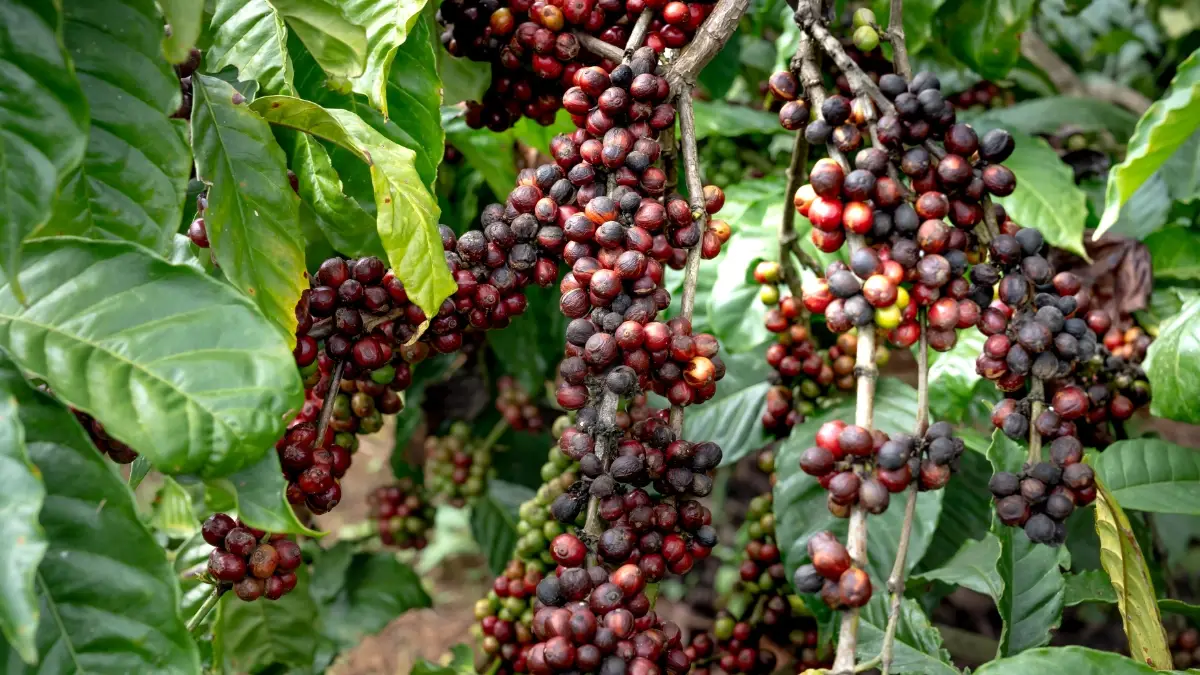
Although Robusta dominates production, Vietnam’s coffee industry is not limited to one variety. Arabica cultivation, specialty coffee production and improvements in processing methods are contributing to a more diverse coffee landscape. Increasing attention to bean origins, quality and brewing techniques is also helping Vietnamese coffee reach consumers beyond traditional export markets.
From large-scale coffee production to small specialty roasters, the industry continues to evolve. This changing landscape provides an important backdrop to understanding the different types of coffee and cafés found across Vietnam today.
2. The Art of Vietnamese Coffee
Robusta, Arabica and a changing coffee scene
Robusta is central to Vietnam’s coffee economy and features in many familiar local coffee blends. Compared with Arabica, it is often associated with a fuller body, stronger bitterness and a more intense flavour. However, the taste of a cup depends on much more than the coffee species. Cultivar, growing conditions, processing, roasting and brewing all influence the final result.
Although Robusta remains closely associated with traditional Vietnamese coffee, the country’s coffee scene is becoming increasingly diverse. Arabica cultivation, speciality-grade Robusta and independent coffee roasters are introducing more variety to what Vietnam produces and serves.
Speciality cafés make these differences easier to explore. Rather than assuming that “Vietnamese coffee” refers to a single flavour, ask what beans are in the cup, where they were grown and how they were processed. Some cafés offer single-origin beans, lighter roasts and pour-over brewing alongside traditional drinks, giving visitors a chance to discover a different side of Vietnamese coffee.
The phin filter
A phin, traditionally known as the Vietnamese coffee filter, is a small metal coffee filter that sits over a cup or glass. Ground coffee is placed inside, gently pressed with its filter insert, and brewed by pouring hot water over it. The coffee then drips slowly through the filter by gravity.
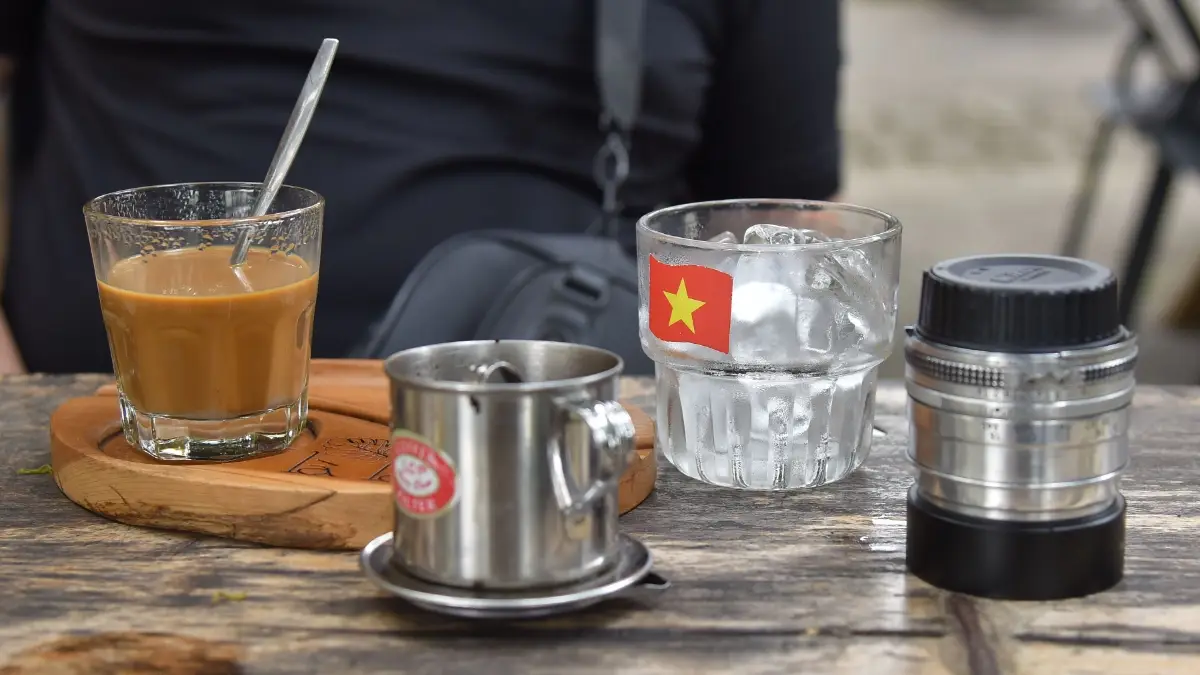
The result depends on several factors, including the coffee variety, grind size, coffee-to-water ratio, water temperature and brewing time. This means a cup of phin coffee can taste quite different from one café to another, even when the same brewing method is used.
Watching the coffee slowly drip is part of the experience, but the phin is also a practical everyday brewing tool. Its simple design requires no electricity or complex equipment, making it easy to use at home, in neighbourhood cafés and in small coffee stalls across Vietnam.
Why condensed milk?
Sweetened condensed milk has become a familiar partner for Vietnamese brewed coffee. Its sweetness and creamy texture create a distinctive contrast with the concentrated flavour of coffee, forming the basis of cà phê sữa. When served over ice, it becomes cà phê sữa đá, one of Vietnam’s most recognisable coffee drinks.
The popularity of condensed milk is often linked to the historical limitations of fresh milk availability and storage. However, the exact origins of this combination are not always clearly documented. Rather than relying on an oversimplified historical explanation, it is more useful to understand how condensed milk became an enduring part of Vietnamese coffee preparation.
Today, the combination remains popular because it creates a distinctive balance of sweetness, creaminess and coffee bitterness.
3. Vietnamese Coffee Drinks to Try
Vietnamese coffee comes in more varieties than the familiar iced milk coffee. From strong black coffee to creamy egg coffee and coconut-based creations, each drink offers a different combination of flavours and textures.
If you are visiting Vietnam for the first time, these six drinks are a good starting point for exploring the country’s coffee scene.
Cà phê sữa đá (Vietnamese Iced Milk Coffee)
One of Vietnam’s most recognisable coffee drinks, cà phê sữa đá combines strong brewed coffee with sweetened condensed milk and ice.
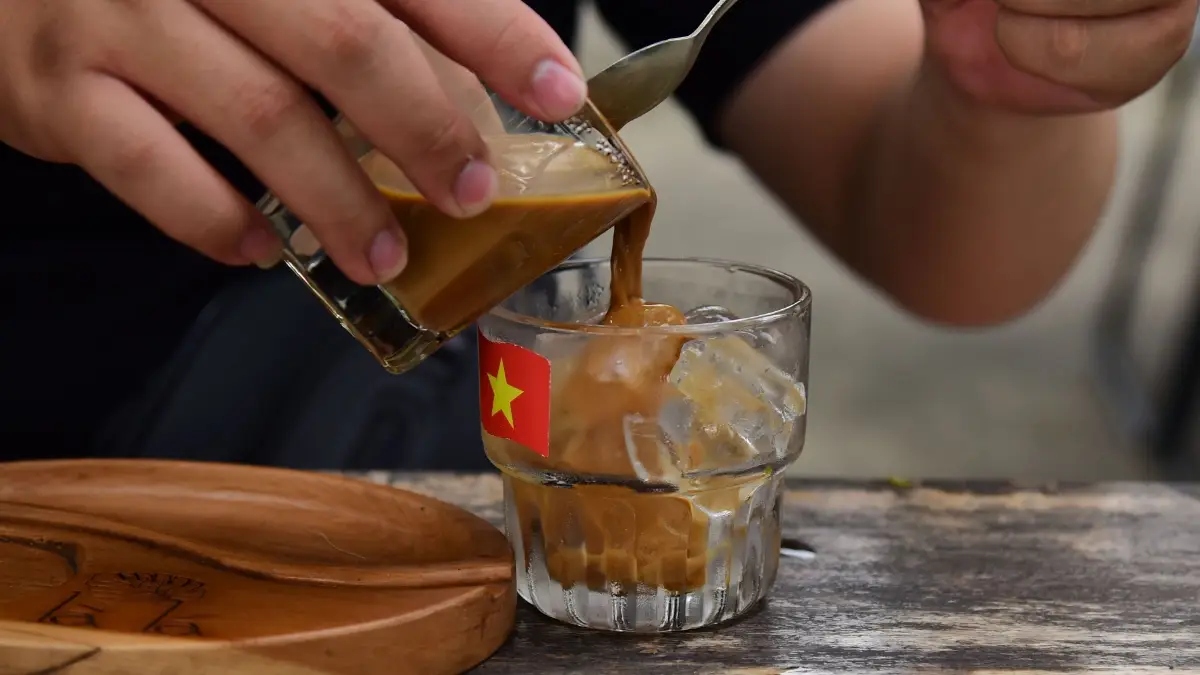
The coffee is typically brewed using a phin filter before being poured over condensed milk and served with ice. The result is a bold, sweet and creamy drink with a balance of coffee bitterness and richness.
It is a good first order if you enjoy sweet, full-bodied cold drinks. Stir before sipping to combine the layers and bring the flavours together.
Cà phê đen đá (Vietnamese Iced Black Coffee)

If you prefer coffee without milk, try cà phê đen đá. It is brewed coffee served over ice, usually without milk, allowing the coffee’s natural flavour and bitterness to take centre stage.
Its flavour can vary depending on the beans, roasting style and brewing method. Some cafés serve it sweetened, so ask for không đường (no sugar) if you prefer it unsweetened.
For a hot version, order cà phê đen nóng.
Bạc xỉu (Vietnamese Milk-Forward Coffee)
Bạc xỉu is a milk-forward coffee drink made with a smaller amount of coffee and a larger proportion of milk, commonly sweetened condensed milk.
Compared with cà phê sữa đá, it is generally sweeter, creamier and less intense, making it a popular choice for people who enjoy the taste of coffee but prefer a milder drink.
The exact proportions vary between cafés, so the flavour and strength may differ from one place to another.
Cà phê trứng (Vietnamese Egg Coffee)
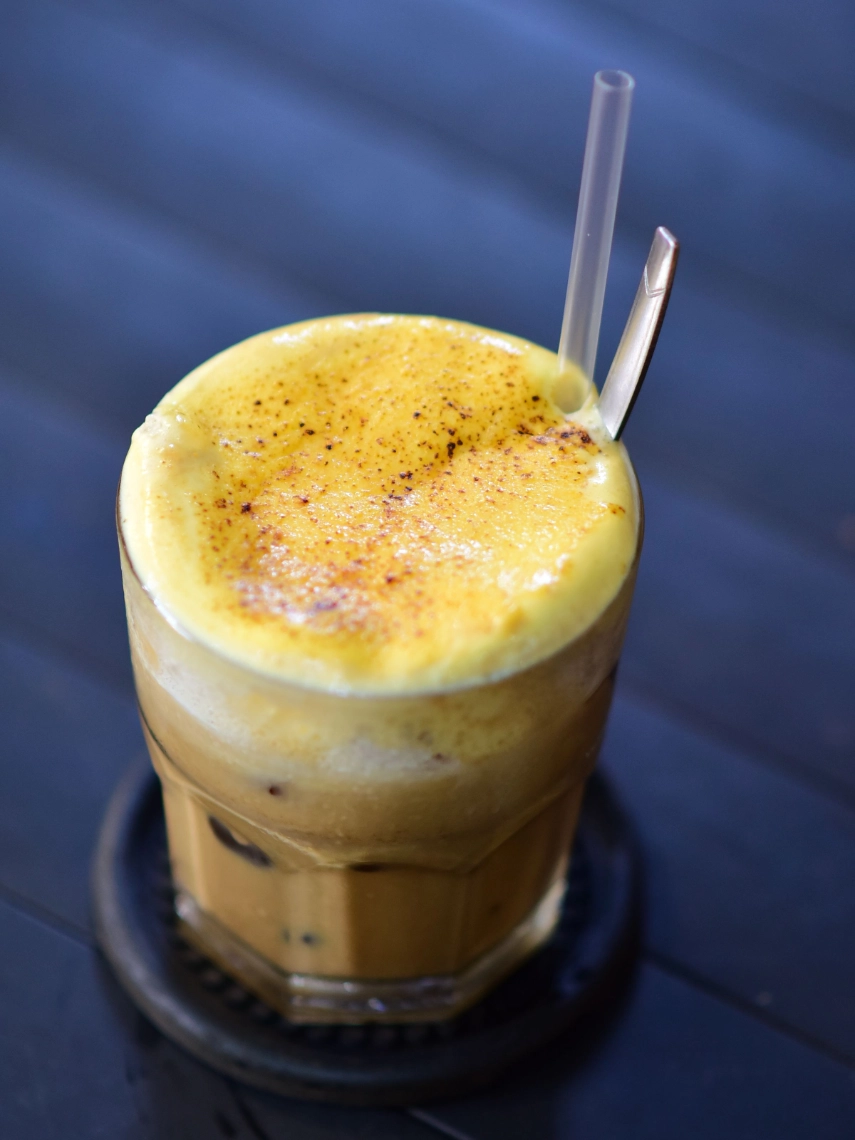
Originally associated with Hanoi, cà phê trứng combines strong coffee with a creamy topping made from whipped egg yolks and sweetened condensed milk.
Although egg coffee is closely associated with northern Vietnam, it can also be found in selected cafés in Ho Chi Minh City. If you have an egg allergy, check the ingredients before ordering.
The topping has a thick, velvety texture similar to custard, creating a contrast with the rich coffee underneath. It is often served hot in a small cup, although some cafés offer iced versions.
Cà phê dừa (Vietnamese Coconut Coffee)
Cà phê dừa combines coffee with coconut-based ingredients, creating a drink with a balance of coffee bitterness and tropical sweetness.
Depending on the café, it may be prepared with coconut milk, coconut cream or a blended coconut mixture, sometimes served with ice to create a thick, almost smoothie-like texture.
Its preparation varies between establishments, making it worth trying at different cafés if you enjoy coconut flavours.
Cà phê muối (Vietnamese Salt Coffee)
Cà phê muối, or salt coffee, combines brewed coffee with a creamy topping lightly seasoned with salt.
The small amount of salt helps balance the sweetness and bitterness, producing a smooth drink with a distinctive savoury note.
The drink is particularly associated with Huế, in central Vietnam, but has since appeared on menus at cafés across the country, including Ho Chi Minh City.
It is an interesting option if you want to explore something beyond the more familiar Vietnamese coffee combinations.
4. Ho Chi Minh City Café Culture
Ho Chi Minh City’s café culture is best understood by looking beyond the coffee itself. The city offers an unusual variety of places to drink it, from informal sidewalk setups and familiar neighbourhood cafés to converted apartment buildings and contemporary speciality bars.
Ho Chi Minh City’s café culture is best understood by looking beyond the coffee itself. The city offers an unusual variety of places to drink it, from informal sidewalk setups and familiar neighbourhood cafés to converted apartment buildings and contemporary speciality bars.
Sidewalk Coffee and the Street
A small curbside café can put you close to the pulse of Ho Chi Minh City: delivery riders passing, shopkeepers opening up, neighbours greeting one another and the constant movement of the streets.
Locals may call some humble street coffee setups cà phê cóc, a colloquial term whose use can vary. Seating is often low and simple, with small plastic stools arranged along the pavement. Space is shared with the street, and the surroundings become part of the experience.
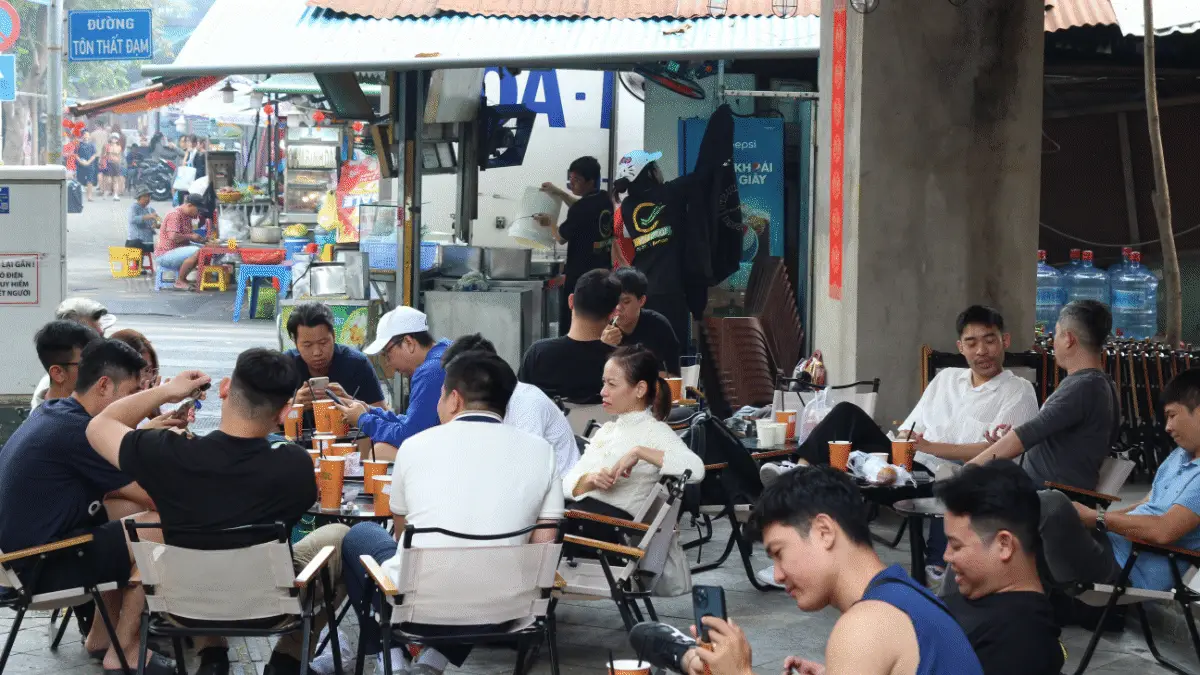
These cafés are generally informal and unpretentious. Some serve familiar coffee drinks from a small setup, while others operate as established neighbourhood gathering spots. Their appeal often lies in their accessibility and connection to everyday street life rather than elaborate interiors or extensive menus.
If you decide to stop at one, choose a spot where customers are welcome, keep doorways and pedestrian routes clear, and follow the host’s lead about where to sit.
Morning Rituals and Lingering
Morning is a vivid time to see cafés in use, but coffee is not confined to the beginning of the day.
A quick cup before work, a midday conversation, an afternoon break and an evening meet-up all belong to the city’s café rhythm. Some people stop briefly before continuing their routines, while others stay longer to talk, read or simply spend time with friends.
The pace varies from one café to another. A busy street-side stall may have a steady flow of customers, while a quieter neighbourhood café can offer a more relaxed atmosphere.
Rather than assuming that every Vietnamese coffee drinker follows the same routine, pay attention to the place itself. The people, conversations and pace of each café reveal different aspects of everyday life in Saigon.
The Neighbourhood Café: A Familiar Part of Daily Life
Beyond the busy streets and popular coffee destinations, neighbourhood cafés are an important part of everyday life in Ho Chi Minh City.
Often tucked into residential streets, small alleys or the ground floors of local buildings, these cafés serve people who live and work nearby. Some have simple interiors and familiar menus, while others have been part of the same neighbourhood for years.
Their appeal is not necessarily the coffee itself. Regular customers may return because they know the owner, recognise familiar faces or simply enjoy having a place where they feel comfortable.
Unlike cafés designed primarily to attract visitors, neighbourhood establishments often develop their own routines around the people who frequent them. Conversations, quick greetings and familiar orders become part of the atmosphere.
For visitors, stepping into one of these cafés offers a chance to experience a less curated side of Saigon. You may not find an elaborate menu or carefully designed interior, but you can gain a closer look at how coffee fits into the everyday rhythm of the city.
Traditional and Specialty Cafés
Ho Chi Minh City’s coffee scene brings older and newer traditions together. A cloth-filter café, a phin-focused neighbourhood shop, a familiar café chain, an apartment café and a specialty coffee bar each offer a different way to experience Vietnamese coffee.
Ho Chi Minh City’s coffee scene brings older and newer traditions together. A cloth-filter café, a phin-focused neighbourhood shop, a familiar café chain, an apartment café and a specialty coffee bar each offer a different way to experience Vietnamese coffee.
These approaches do not necessarily compete. Modern brewing does not erase older habits; it adds another way for growers, roasters, baristas and customers to interpret Vietnamese coffee.
For visitors, exploring both sides of the scene offers a more complete picture of the city. One cup might introduce you to a familiar local ritual, while another reveals how Vietnamese coffee continues to evolve.
5. Where to Experience Coffee in Saigon
Ho Chi Minh City’s café culture is best understood by looking beyond the coffee itself. The city offers an unusual variety of places to drink it, from informal sidewalk setups and familiar neighbourhood cafés to converted apartment buildings and contemporary speciality bars.
Ho Chi Minh City’s café culture is best understood by looking beyond the coffee itself. The city offers an unusual variety of places to drink it, from informal sidewalk setups and familiar neighbourhood cafés to converted apartment buildings and contemporary speciality bars.
Cheo Leo Café · Traditional Cloth-Filter Coffee
Cheo Leo is known for its long-standing coffee tradition and association with cà phê vợt, a brewing method that uses a cloth filter rather than the more familiar metal phin. If it is operating when you visit, it offers an opportunity to experience a traditional preparation method with a distinct place in Saigon’s coffee history. Check its current address, opening hours and availability of cloth-filter coffee before travelling.
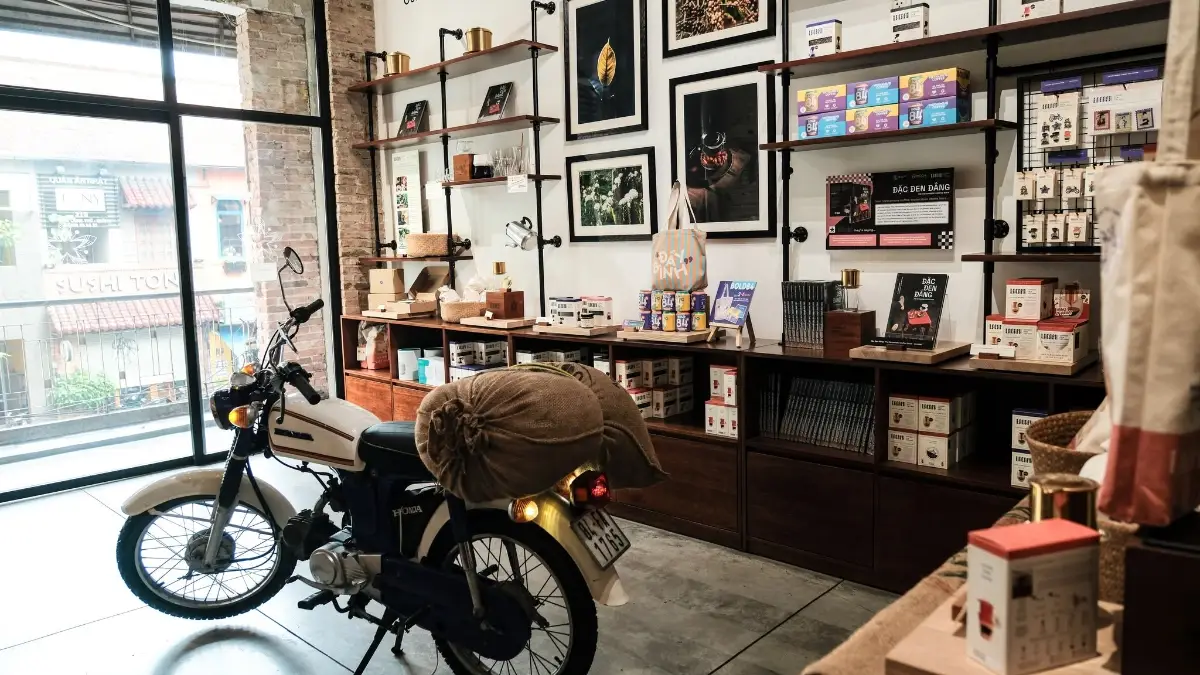
Lacàph Coffee Experiences Space · Vietnamese Coffee Education
Lacàph offers a more curated introduction to Vietnamese coffee, with an emphasis on local beans, coffee traditions and brewing experiences. Its Coffee Experiences Space is listed at 220A Nguyễn Công Trứ, while its separate Coffee Bar is located at 151 Đồng Khởi. Check the official website for current opening hours and experience bookings before visiting.
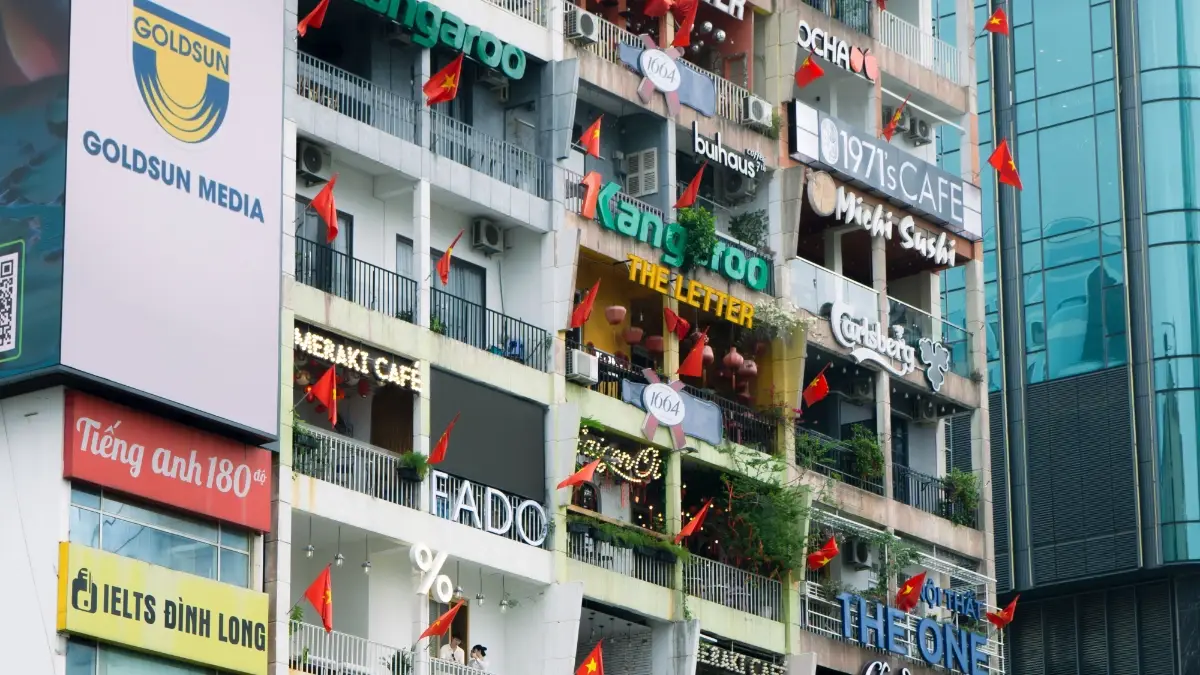
42 Nguyễn Huệ · Apartment Café Experience
Known as the Cafe Apartment, this multi-storey building brings together independent cafés, shops and creative businesses overlooking Nguyễn Huệ Walking Street.
Rather than visiting for one particular coffee, explore its different spaces and discover the variety of café concepts within the building. Check current tenant information, access arrangements and any applicable entrance or lift fees before going.
XLIII Speciality Coffee · Contemporary Vietnamese Coffee
XLIII Speciality Coffee represents the contemporary side of Vietnam’s coffee scene, with an emphasis on speciality beans and brewing techniques. Its official website lists a café at 178A Pasteur and a separate Coffee Home in Thảo Điền. At the Pasteur location, ask about the Vietnamese beans available and how the team recommends tasting them. Confirm the current venue details before travelling.
6. How to Enjoy Coffee Like a Local
Experiencing Vietnamese coffee is not just about choosing the right drink. Knowing a few local phrases, understanding how cafés operate and being comfortable with different settings can make the experience much easier.
Useful Vietnamese Coffee Phrases
You do not need to speak Vietnamese to order coffee in Ho Chi Minh City, but learning a few basic expressions can make everyday interactions more enjoyable.
| Vietnamese phrase | English meaning |
|---|---|
| Cà phê sữa đá | Iced coffee with condensed milk |
| Cà phê đen đá | Iced black coffee |
| Cà phê sữa nóng | Hot coffee with condensed milk |
| Cà phê đen nóng | Hot black coffee |
| Ít đường | Less sugar |
| Không đường | No sugar |
| Mang đi | Takeaway |
Pronunciation varies by accent; pointing to a menu or showing the written phrase is perfectly practical. If you have dietary restrictions, ask about ingredients directly, especially in blended or topped drinks.
What to Expect at Vietnamese Cafés
Café menus and service styles vary considerably across Ho Chi Minh City. Some establishments take payment at the counter, while others offer table service. Many accept cashless payments, but smaller sidewalk stalls may still prefer cash.
If prices are not displayed, ask before ordering. Coffee prices vary depending on the neighbourhood, venue and drink, so there is no single price range that accurately represents every café. Carrying some small cash is useful when visiting informal street coffee stalls.
It is also worth being mindful of your surroundings. Keep valuables secure, avoid blocking pedestrian routes and be considerate when photographing people or private spaces. A quick gesture or polite request before taking someone’s photograph can make a difference.
For your first coffee exploration in Saigon, try one traditional sidewalk café and another establishment offering a different brewing style. Order a familiar drink at one, then ask the barista or owner for a recommendation at the other.
The contrast between these places is often more revealing than simply working through a checklist of famous Vietnamese coffee drinks.
Frequently Asked Questions
What is Vietnamese coffee culture?
Vietnamese coffee culture describes the many ways coffee is grown, prepared and shared in Vietnam, from phin-brewed coffee and condensed-milk drinks to sidewalk stalls, neighbourhood cafés and specialty coffee bars. It varies by region and venue; in Ho Chi Minh City, cafés are both places to drink coffee and everyday social spaces.
Why is Vietnamese coffee often strong?
Many traditional blends use Robusta, which is commonly associated with a bold, bitter profile, and coffee may be brewed as a concentrated serving. But strength depends on the beans, roast, recipe and café. Vietnam also produces Arabica and specialty coffees with different flavour profiles.
What is a Vietnamese phin?
A phin is a compact metal drip filter placed over a cup. Hot water passes slowly through ground coffee by gravity, producing a concentrated brew. It is a common traditional method, although cafés also use espresso machines, pour-over brewers and other equipment.
What should I order first?
Try cà phê sữa đá for a sweet iced coffee with condensed milk. Choose cà phê đen đá for black coffee, or bạc xỉu for a milkier, milder drink. Tell the café if you want less or no sugar.
Is egg coffee from Ho Chi Minh City?
Egg coffee is most closely associated with Hanoi, where it became a recognised local specialty. You may also find it in Ho Chi Minh City cafés, but it is not the city’s defining coffee tradition.
Where can I see apartment cafés in Ho Chi Minh City?
The best-known example is the building at 42 Nguyễn Huệ, which Vietnam Tourism describes as an apartment-café complex. Businesses and access conditions can change, so check recent local information before visiting.
Are sidewalk cafés appropriate for visitors?
Yes, when the business is open to customers and seating does not obstruct pedestrians or nearby businesses. Follow the host’s cues, ask before photographing people, and move if staff need to clear the area.