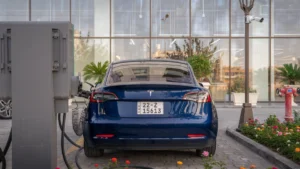
Electric vehicles and hybrid cars are giving buyers more options than ever when choosing their next car. But with EVs, hybrids, plug-in hybrids, and range-extended electric vehicles now available, choosing the right powertrain is no longer as simple as comparing petrol and electric cars.
Each technology works differently and comes with its own advantages and trade-offs. So, should you buy an EV, hybrid, PHEV, or REEV?
The answer depends less on which technology is “better” and more on how you use your car, where you can charge it, how far you typically drive, and what you expect to spend over the long term.
What Are the Differences Between EVs, Hybrids, PHEVs, and REEVs?
Before comparing these technologies, it helps to understand how each one uses and generates energy. Although all four can use electric motors, their powertrain architectures are different.
What Is an EV?
An EV (Electric Vehicle) uses an electric motor to drive the wheels and gets its energy primarily from a high-voltage battery. The battery can be charged at home, at work, or at public charging stations.
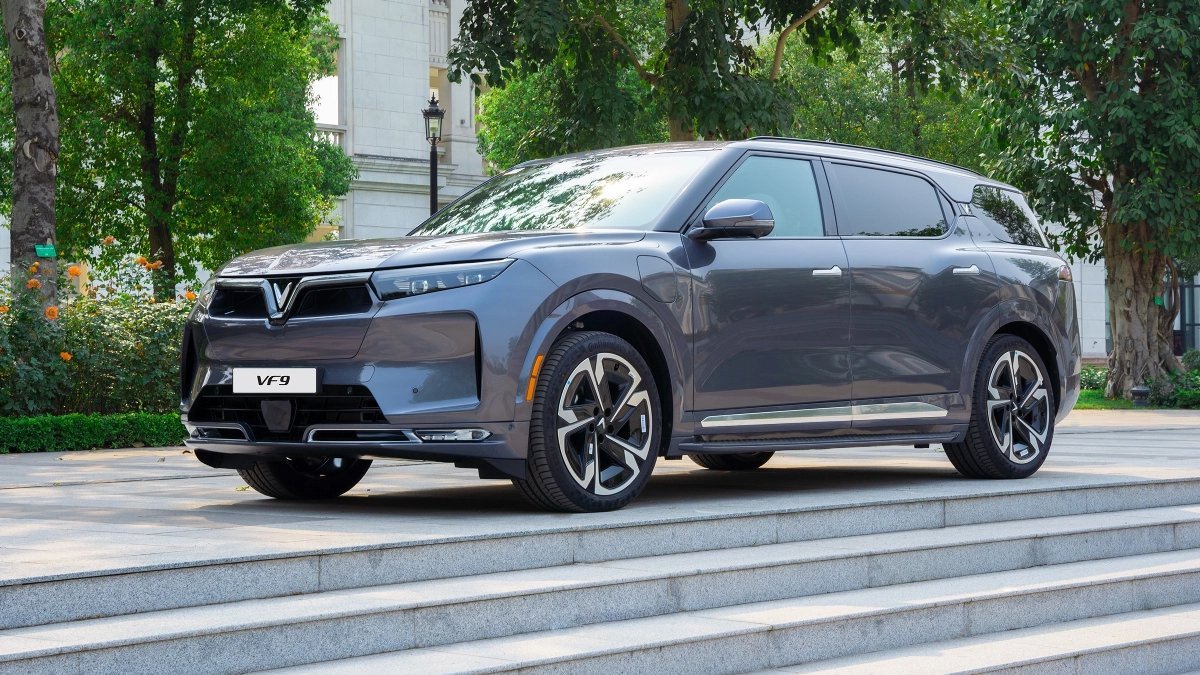
The battery can be charged at home, at work, or at public charging stations. Unlike conventional petrol cars, an EV does not use an internal combustion engine for propulsion. With fewer components in the drivetrain, EVs can also offer a quieter driving experience.
What Is a Hybrid?
A hybrid electric vehicle (HEV) combines an internal combustion engine with one or more electric motors. Depending on the vehicle’s design and driving conditions, the engine and electric motor can operate separately or together. The battery can also recover energy through regenerative braking.
A conventional hybrid does not normally need to be plugged into an external power source. Its battery is recharged through regenerative braking and, depending on the system, the internal combustion engine.
What Is a Plug-in Hybrid?
A PHEV (Plug-in Hybrid Electric Vehicle) also combines an internal combustion engine with an electric motor, but it has a larger battery that can be charged from an external power source.
This allows a PHEV to operate in electric mode for a certain distance before the internal combustion engine becomes more involved in propulsion. A PHEV can therefore combine electric driving for everyday trips with the flexibility of a petrol engine for longer journeys.
What Is a REEV?
A REEV (Range-Extended Electric Vehicle), also known as an EREV (Extended-Range Electric Vehicle), is an electric vehicle with an additional range-extending system. The key difference is how the internal combustion engine is used.

In a series-REEV architecture, the electric motor provides propulsion to the wheels, while the internal combustion engine operates a generator to produce electricity when additional energy is needed.
This allows a REEV to provide an EV-like driving experience while using an internal combustion engine as a range extender when needed.
EV vs. Hybrid vs. PHEV vs. REEV: What's the Difference?
| Feature | EV | HEV | PHEV | REEV |
|---|---|---|---|---|
| Internal combustion engine | No | Yes | Yes | Yes |
| Electric motor | Yes | Yes | Yes | Yes |
| External charging | Yes | No | Yes | Yes |
| Can use petrol | No | Yes | Yes | Yes |
| Electric-only driving | Yes | Limited | Yes | Yes |
| Dependence on charging infrastructure | Higher | Lower | Moderate | Lower than EV |
| Engine directly drives wheels | No | Depending on system | Depending on system | No* |
*In a series-REEV architecture, the internal combustion engine operates a generator rather than directly driving the wheels. Specific implementations can vary between manufacturers.
The key difference is therefore not simply whether a vehicle has a petrol engine. It is how the engine, battery, and electric motor work together to provide propulsion.
What Should You Consider When Choosing a Powertrain?
There is no single factor that determines which technology is right for everyone. When comparing an EV, HEV, PHEV, or REEV, consider the total cost of ownership, your daily driving habits, charging options, and long-distance requirements.
1. Purchase Price
The initial price of a vehicle depends on its brand, model, segment, equipment, and powertrain technology. It is therefore difficult to say that EVs, hybrids, PHEVs, or REEVs are always more or less expensive than one another. Beyond the sticker price, consider:
- Registration and initial ownership costs.
- Standard and optional equipment.
- Battery and vehicle warranty coverage.
- Home charging equipment and installation.
- Manufacturer incentives.
- Expected running costs.
If two vehicles have similar purchase prices, it makes more sense to compare their Total Cost of Ownership (TCO) rather than focusing only on the upfront cost.
2. Fuel and Energy Costs
Energy costs are one of the biggest differences between electrified powertrains. For an EV, energy costs mainly depend on electricity consumption and the price of electricity or public charging. For an HEV, operating costs are primarily linked to fuel consumption and petrol prices. PHEVs and REEVs can use both electricity and petrol, so their actual energy costs depend heavily on how they are driven and how frequently they are charged. A simple calculation is:
Energy Cost = Energy Consumption × Distance × Energy Price
For PHEVs and REEVs, it can be useful to calculate two scenarios:
Cost when the vehicle primarily operates on electricity.
Cost when the vehicle relies more heavily on its internal combustion engine or range extender.
For example, if you drive 1,000 km per month, use the real-world energy consumption of the specific vehicle to estimate your monthly cost rather than relying solely on manufacturer figures. Actual consumption can vary depending on driving style, speed, traffic, vehicle load, weather, and charging habits.
3. Maintenance Costs
EVs have fewer components associated with an internal combustion engine, so they do not require certain maintenance items such as engine oil or spark plug replacement. However, EVs still require regular maintenance for components such as:
- Tyres.
- Brakes.
- Air conditioning.
- Electrical systems.
- Battery and battery management systems.
- Other components specified by the manufacturer.
HEVs, PHEVs, and REEVs still have an internal combustion engine and therefore retain some engine-related maintenance requirements. REEVs are particularly interesting because, although the internal combustion engine primarily serves as a generator in a series configuration, it is still an engine that requires maintenance.
Thus, instead of simply asking “Which type of car requires less maintenance?”, check the actual maintenance schedule, service costs, and warranty coverage for the specific model.
4. Charging and Refuelling
Charging access can have a major impact on everyday convenience.
EVs depend entirely on charging their batteries. If you have access to charging at home or at work, charging can become a relatively simple part of your daily routine. PHEVs and REEVs can also be charged externally while retaining an internal combustion engine for situations where additional range is needed.
Conventional HEVs do not normally require external charging. Their batteries are replenished through regenerative braking and the vehicle’s powertrain.
| Feature | EV | HEV | PHEV | REEV |
|---|---|---|---|---|
| Primary energy sources | Electricity | Petrol + electricity | Electricity + petrol | Electricity + petrol |
| Requires external charging | Yes | No | Yes | Yes |
| Home charging | Possible | Not required | Possible | Possible |
| Can refuel with petrol | No | Yes | Yes | Yes |
| Dependence on public charging | Higher | Low | Moderate | Lower than EV |
| Internal combustion engine | No | Yes | Yes | Yes |
If you do not have reliable access to charging, an HEV may offer a simpler ownership experience. If you can charge regularly, an EV, PHEV, or REEV may allow you to make greater use of electric driving.
5. Long-distance Driving
If you regularly travel between cities or take long road trips, consider driving range, energy availability, and the time required to recharge or refuel. For an EV, a long-distance trip may require planning around:
- Expected travel distance.
- Remaining battery charge.
- Charging station locations.
- Charging time.
- Traffic and weather conditions.
PHEVs and REEVs have an internal combustion engine, which can reduce dependence on public charging infrastructure during longer journeys. REEVs are particularly interesting because they combine electric propulsion with a range extender. The electric motor continues to drive the wheels while the range-extending system can generate additional electricity when required.
HEVs remain flexible for long-distance travel because they can be refuelled at conventional petrol stations. This does not mean EVs are unsuitable for long-distance driving. The key considerations are charging infrastructure, real-world range, and how well the journey can be planned.
6. Driving Experience
EVs and REEVs use electric motors as the primary source of propulsion, which can provide immediate torque, smooth acceleration, and relatively quiet operation. With HEVs and PHEVs, the driving experience can vary depending on whether the vehicle is using the electric motor, internal combustion engine, or both. Consider:
- Cabin noise.
- Electric motor response.
- Acceleration.
- Smoothness when switching between power sources.
- Whether you prefer a familiar petrol-car driving experience or an EV-like experience.
There is no universally better driving experience. The right choice depends on what you value behind the wheel.
7. Long-term Ownership Value
When buying a car, do not look only at the purchase price. A vehicle that costs less upfront may not necessarily have the lowest total cost over several years. A more complete approach is:
Total Cost of Ownership = Purchase Price + Energy + Maintenance + Other Ownership Costs − Resale Value
Resale value and battery-related costs can vary significantly depending on the model, vehicle condition, market conditions, and battery warranty. If you plan to keep the vehicle for several years, check:
- Battery warranty terms and coverage.
- Maintenance schedule.
- Routine service costs.
- Replacement costs for major components.
- Availability of authorised service centres.
- Expected resale value.
For newer technologies such as REEVs, it is also worth checking the manufacturer’s service network, parts availability, and after-sales support before making a purchase.
8. Charging Infrastructure and After-sales Support
For EVs, PHEVs, and REEVs, the ownership experience depends not only on the vehicle itself but also on the ecosystem supporting it. Before buying, check:
- Availability of compatible charging stations.
- Home charger installation options.
- Number and location of authorised service centres.
- Availability of replacement parts.
- Battery and high-voltage system warranty.
- Technical support and roadside assistance.
- Software and system updates, where applicable.
This can be particularly important for newer technologies such as REEVs, where service coverage and parts availability may vary between brands and markets.
Should You Buy an EV, Hybrid, PHEV, or REEV?
Instead of asking which technology is better, start with a more practical question: How do you actually use your car?
Consider an EV if you:
- Mainly drive in urban areas.
- Have convenient access to charging.
- Have a relatively predictable daily commute.
- Want to reduce your reliance on petrol.
- Prefer a quiet driving experience.
- Can plan ahead for longer journeys.
In this situation, charging convenience may matter more than the vehicle’s advertised energy efficiency. A highly efficient EV can still be inconvenient if reliable charging is difficult to access.
Consider an HEV if you:
- Frequently drive long distances.
- Do not have reliable access to charging.
- Want better fuel efficiency while retaining conventional refuelling.
- Need flexibility across different driving conditions.
- Are not ready to depend heavily on charging infrastructure.
An HEV can be a practical option for drivers who want to move toward electrification without significantly changing how they use their car.
Consider a PHEV if you:
- Can charge regularly.
- Mostly drive short or medium distances during the week.
- Want to use electric power for everyday driving.
- Still need a petrol engine for longer journeys.
However, the benefits of a PHEV depend heavily on regular charging. If you rarely charge the battery, you may not fully use the vehicle’s electric-driving capability.
Consider a REEV if you:
- Want an EV-like driving experience.
- Can charge regularly for everyday driving.
- Occasionally take long-distance trips.
- Want to reduce dependence on public charging during longer journeys.
- Prefer having a petrol-powered range extender as an additional energy source.
REEV can be particularly interesting for drivers whose daily usage suits an EV but who still have concerns about longer journeys and charging availability.
Quick Guide: Which Powertrain Fits Your Needs?
| Your driving needs | Powertrain to consider |
|---|---|
| Mainly city driving | EV |
| Convenient home charging | EV / PHEV / REEV |
| No reliable access to charging | HEV |
| Frequent long-distance driving | HEV / PHEV / REEV |
| Want to minimise petrol use | EV |
| Need convenient refuelling | HEV / PHEV / REEV |
| Prefer electric-motor driving | EV / REEV |
| Want minimal changes from a conventional petrol car | HEV |
| Want electric driving for daily trips but petrol for longer journeys | PHEV / REEV |
| Want electric propulsion with less dependence on public charging | REEV |
| Want a fully electric powertrain | EV |
This table is a guide based on common use cases, not a universal rule. Your final decision should also consider the specific vehicle model, purchase price, real-world efficiency, driving range, charging access, and after-sales support in your market.
Frequently Asked Questions
Is an EV cheaper to run than a hybrid?
It can be, but you should not assume that every EV is cheaper to operate than every hybrid. Actual costs depend on energy consumption, electricity prices, petrol prices, driving distance, and where the vehicle is charged. The most useful comparison is the energy cost per kilometre between specific models.
Does an EV require less maintenance than a hybrid?
EVs have fewer components associated with internal combustion engines, so they do not require some engine-related maintenance. However, they still require maintenance for tyres, brakes, air conditioning, electrical systems, and other components. Hybrids still use an internal combustion engine and therefore retain additional engine-related maintenance requirements.
Does a hybrid need to be plugged in?
A conventional HEV does not normally need to be plugged in. Its battery is recharged through regenerative braking and the vehicle’s powertrain. A PHEV, however, can be plugged into an external power source and has a larger battery designed for electric driving.
Is a REEV the same as a hybrid?
Not exactly. Both technologies combine an electric motor with an internal combustion engine, but their architectures can be different. In a series-REEV configuration, the electric motor provides propulsion to the wheels while the internal combustion engine primarily operates a generator to produce electricity.
What is the difference between a PHEV and a REEV?
Both can be externally charged and both have an internal combustion engine. The key difference is how that engine participates in propulsion. In a PHEV, the internal combustion engine can contribute directly to driving the wheels depending on the vehicle’s architecture. In a series REEV, the engine primarily generates electricity for the electric drivetrain rather than directly driving the wheels.
Is an EV suitable for long-distance driving?
Yes, but you need to consider real-world driving range, charging locations, and charging time along the route. If you frequently take long road trips, the availability of charging infrastructure should be part of your purchase decision. HEVs, PHEVs, and REEVs may also be worth considering if reducing dependence on public charging during long journeys is important to you.
Should you buy an EV or hybrid for city driving?
If you mainly drive in the city and have convenient access to charging, an EV may be worth considering. If you do not have reliable charging access or regularly combine city driving with long-distance trips, an HEV may provide greater flexibility. A PHEV or REEV can also be considered if you want electric driving for everyday trips while retaining an internal combustion engine for longer journeys.
Conclusion
There is no single answer to whether you should buy an EV, hybrid, PHEV, or REEV. The right choice depends on how you actually use your car.
If you mainly drive in urban areas, have convenient charging access, and want to rely primarily on electricity, an EV may be a suitable option.
If you frequently travel long distances, do not have reliable charging access, or want the flexibility of conventional refuelling, an HEV may better match your needs. If you want electric driving for everyday use while retaining an internal combustion engine for longer journeys, consider a PHEV. If you want an EV-like driving experience while reducing your dependence on public charging during long trips, a REEV may be worth considering.
Before making a decision, look at at least five factors: your typical driving distance, charging access, running costs, long-distance driving needs, and after-sales support. The most suitable car is not necessarily the one with the newest technology or the longest list of features. It is the one that fits how you actually use your car every day.